
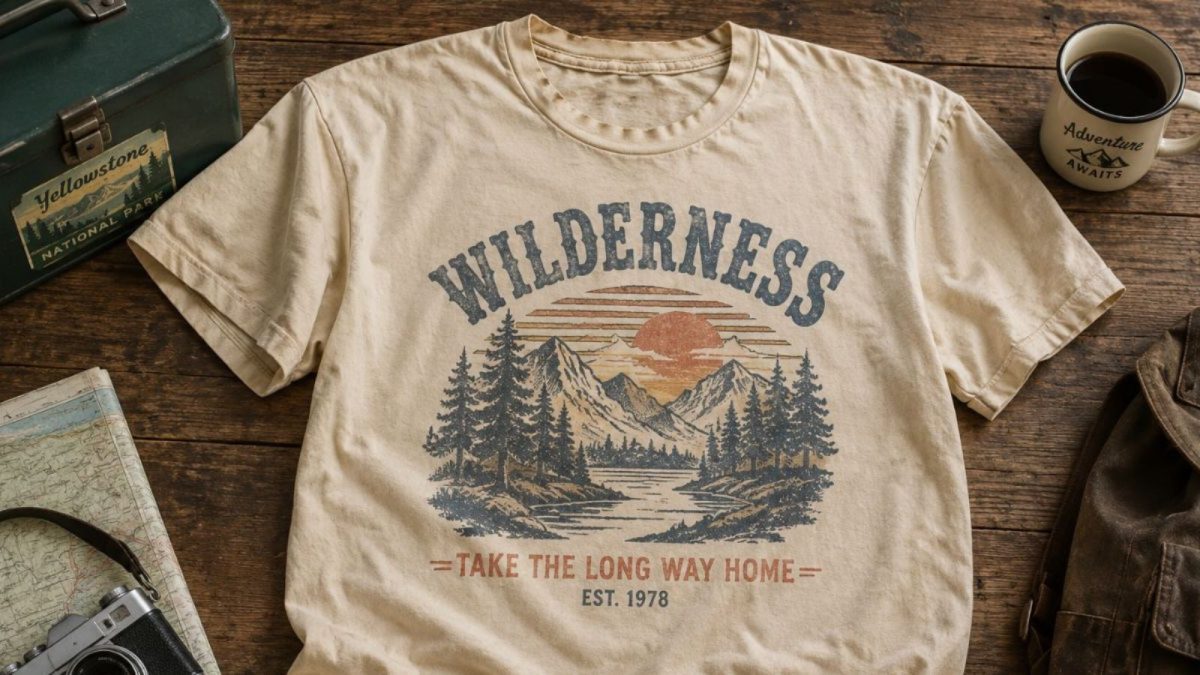
Designing a great shirt used to rely heavily on experience, sketching skills, and trial and error. Today, AI t-shirt design is changing how ideas are created and turned into wearable apparel.
Instead of starting from a blank page, you can generate concepts in seconds and explore styles much faster. That shift has changed how graphic tees and vintage-inspired apparel are developed, but it also raises a key question: where does human creativity still matter most?
The answer is that this design approach works best at the beginning of the process. It helps spark direction and visual ideas, while human judgment shapes what actually works on fabric and connects with people in real life.
Why AI Is Changing the Way T-Shirt Designs Start
One of the biggest advantages is how quickly it removes the blank-canvas problem.
Instead of struggling to sketch initial ideas, you can type a description and instantly get visual directions like:
- distressed vintage surf graphics
- retro 80s arcade-inspired artwork
- faded racing emblems with worn textures
- grunge-style band tees with layered ink effects
This makes it easier to explore creative directions without committing too early. For vintage apparel, especially, you can test different eras, moods, and textures in minutes instead of hours.
At this stage, AI acts as a visual brainstorming tool that accelerates creative work, helping you move from idea to concept much faster than traditional methods.
Where AI Helps Most in the Creative Process
The biggest value comes in early exploration, not final production. Instead of replacing design work, it speeds up the thinking phase in the early stages of development.
You’ll get the most use from it when you:
- Explore early concepts
- Test different visual themes
- Try typography styles
- Build mood boards
- Generate rough layout ideas
- Experiment with color combinations
This is especially helpful for small apparel brands, independent creators, or anyone testing multiple ideas before committing to a final direction.
Rather than spending hours sketching variations, you can quickly see what feels right visually and move forward with stronger clarity.
The Downsides You Don’t Always Notice at First
Even when designs look polished on screen, issues often appear when preparing them for print.
Some common problems include:
- Text that looks stylish but becomes unreadable
- Overcrowded compositions that lose focus
- Uneven spacing or weak visual hierarchy
- Decorative elements with no clear purpose
- Designs that resemble existing styles too closely
Another major challenge is how designs behave on fabric. Details that look sharp on screen can blur or lose clarity when printed, especially on dark shirts or textured fabrics.
This is where many concepts need refinement before they ever reach production.
Why Human Designers Still Matter
While AI can generate ideas quickly, it doesn’t understand purpose, audience, or wearability in the same way a human designer does within a full design approach.
Human designers naturally bring structure and intention to creative work. They understand how to:
- Build around a story or theme
- Balance composition for real-world use
- Improve readability at different distances
- Adjust artwork for different shirt colors
- Maintain consistency across a full collection
This becomes especially important in vintage-inspired apparel, where subtle decisions like spacing, texture, and typography determine whether a shirt feels authentic or artificial.
Instead of producing endless variations, designers refine direction. That refinement is what turns an idea into a wearable product.
Combining Speed and Creative Control
The most effective workflow blends rapid idea generation with thoughtful refinement, balancing AI speed with human decision-making.
A typical process looks like this:
Early Stage Exploration
- Generating rough concepts
- Testing different visual directions
- Creating mood boards
- Trying slogan and layout ideas
Refinement Stage
- Adjusting typography and hierarchy
- Simplifying overly complex elements
- Improving print clarity and contrast
- Fine-tuning spacing and alignment
- Preparing final production files
This approach keeps the creative process fast while ensuring the final result is clean, intentional, and production-ready.
It also prevents rushing into final designs before fully exploring stronger ideas.
A Shirt Has to Work Beyond the Screen
One of the most overlooked parts of apparel design is how it performs in real life.
A design that looks good digitally still needs to work in everyday conditions. That includes:
- Clear contrast against fabric colors
- Proper placement on the chest or back
- Readability from a distance
- Comfort when worn
- Durability after repeated washing
Simpler layouts often perform better because they remain clear and balanced in different environments. Overly complex visuals may lose impact once they are physically printed and worn.
This is where experienced designers add the most value, making sure the shirt works as a real product, not just an idea.
AI vs Human Designers: A Practical Comparison
| Design Factor | AI Tools | Human Designers |
|---|---|---|
| Speed | Instant concept generation | Slower, more deliberate process |
| Originality | Can feel repetitive | More unique and intentional |
| Print Readiness | Often needs refinement | Designed with production in mind |
| Brand Identity | Limited storytelling depth | Strong creative direction |
| Flexibility | Great for experimentation | Strong refinement capability |
| Best Use Case | Early-stage ideas | Final apparel design |
Frequently Asked Questions
Is this approach good for creating custom apparel?
Yes. It helps you quickly generate ideas and explore different styles before refining them for printing.
Can AI-generated designs be printed directly?
Sometimes, but most need adjustments for clarity, spacing, and resolution. Proper preparation ensures the design is ready for production.
Do these designs work well for clothing brands?
They can support ideation, but most strong apparel brands refine or rebuild designs to maintain originality and consistency. A stronger and more cohesive identity comes from that refinement process.
Is it cheaper than hiring a designer?
It is usually more affordable upfront, but professional design work often leads to stronger branding and higher-quality final products. Over time, the added value often outweighs the initial savings.
Can designers use AI in their workflow?
Yes. Many designers use it for brainstorming and early exploration, then refine everything manually for the final output. The combination improves both speed and quality.
Retro Shirtz Custom Bulk T-Shirts Printing near Regency inside Westroads Mall in Omaha
At Retro Shirtz we understand the importance of logo design. So we provide free graphic design, including free logo design with all standard custom shirt orders.
Our free graphic design services include:
- suggesting and implementing fonts
- changing the colors and layout of the fonts, and our team’s excellent skills at creating custom image assets.