
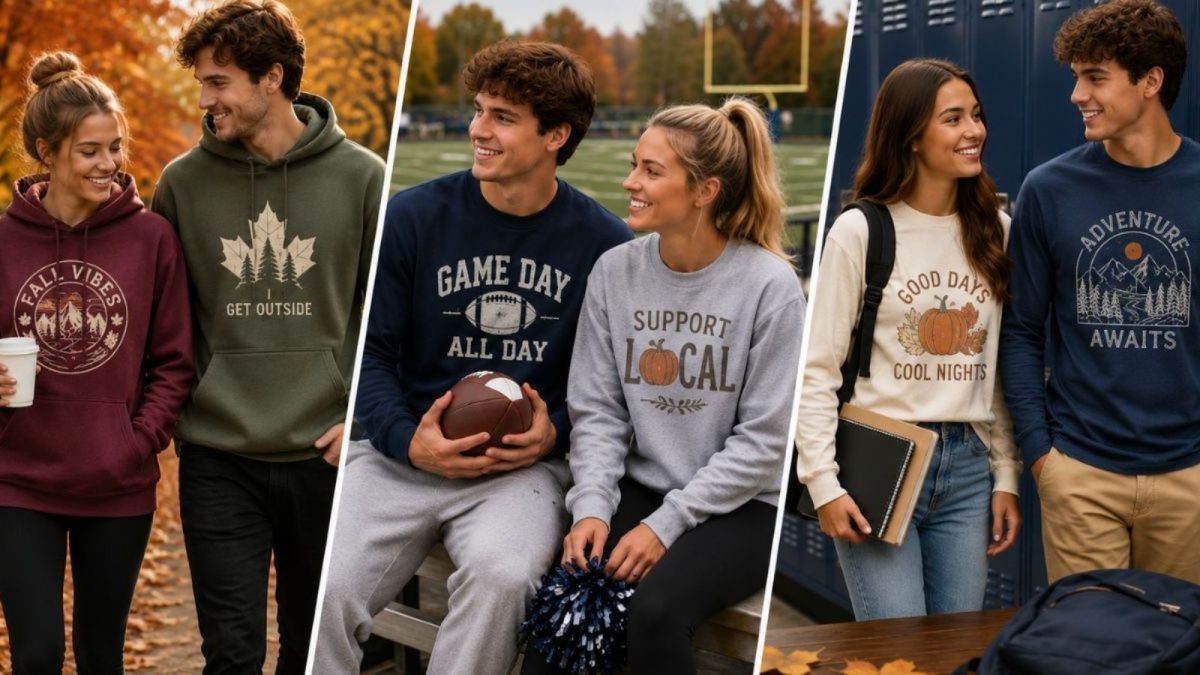
Choosing fall apparel for printing can seem straightforward until the garment needs to work for a specific purpose.
Hoodies, crewnecks, and long-sleeve shirts can all carry the same design, but each creates a different balance of warmth, comfort, appearance, and print placement. A design that works well on one garment may need adjustments on another.
Fall apparel is commonly used for outdoor events, staff uniforms, school groups, team apparel, and merchandise. The strongest choices usually start with a clear purpose and a garment that fits the way it will actually be worn.
The right garment can make the printed design more practical, visible, and wearable throughout the season.
Start With the Intended Use
A common mistake is choosing a garment based primarily on personal preference. A hoodie may be popular for fall, but that does not automatically make it the most practical choice for staff apparel or an active outdoor event.
A useful starting point is:
- Hoodies: Casual merchandise, outdoor events, school and club apparel, and colder settings
- Crewnecks: Staff uniforms, teams, events, and versatile seasonal merchandise
- Long sleeves: Active outdoor events, layering, lighter merchandise, and mobile work settings
The intended use matters because staff may move between indoor and outdoor areas, event attendees may spend hours outside, and merchandise may need to remain useful after the event.
Hoodies Make Sense When Warmth Matters
Hoodies are often chosen when the garment needs to feel like a substantial piece of merchandise. They work well for school groups, clubs, bands, casual brands, and outdoor fall events.
A common misconception is that a hoodie is simply a larger blank surface for a larger design. Its construction creates specific placement considerations:
- Front pocket: Low graphics can compete with the kangaroo pocket on many styles.
- Hood: Back artwork needs to account for the hood’s position.
- Seams: Design placement should account for the garment’s construction.
- Weight: Thicker fabric provides warmth but also adds bulk.
A back print can provide more uninterrupted space, while a smaller chest design can create a simpler appearance.
Hoodies are also useful when merchandise is expected to remain in rotation beyond a single event. The tradeoff is bulk, which can make them less practical for staff working indoors or moving frequently.
Crewnecks Offer a Flexible Middle Ground
Crewnecks can provide more warmth than a standard shirt without the additional bulk of a hood and front pocket. That makes them particularly useful for staff uniforms, teams, events, and seasonal merchandise.
Several characteristics make them practical:
- Open front: No kangaroo pocket competing with a lower graphic
- No hood: Upper back artwork remains unobstructed
- Moderate weight: Suitable for changing fall temperatures
- Simple appearance: Branding remains easy to identify
For staff apparel, a left chest logo may be more functional than a large center graphic when employees need to move, carry equipment, or wear another outer layer.
Crewnecks can also work well when apparel needs to transition between indoor and outdoor settings without the bulk of a hoodie.
Long Sleeves Work Best for Layering
Long sleeve shirts can be useful when additional coverage is needed without the weight of a sweatshirt. Their lighter construction makes them practical for active events, staff apparel, and changing fall temperatures.
Key advantages include:
- Layering: They can fit beneath jackets or vests.
- Mobility: Lighter construction can suit active work.
- Seasonal coverage: They provide more coverage than short-sleeved shirts.
- Sleeve printing: Sleeves create another area for logos, lettering, or team names.
For merchandise, long sleeves offer a fall option for customers who want seasonal apparel without a heavier sweatshirt.
Fabric weight still matters. A lightweight long sleeve intended for layering serves a different purpose from a heavier thermal garment.
Let the Design Influence the Garment
The garment and artwork should be considered together when selecting fall apparel for printing. Artwork placement can affect how a design looks on each garment, and a design that works well on a standard T-shirt may need adjustments when used on a hoodie, crewneck, or long sleeve.
| Garment | Best Fit | Printing Consideration | Main Advantage |
|---|---|---|---|
| Hoodie | Merchandise and outdoor events | Account for the hood, pocket, seams, and fabric weight | Warmth |
| Crewneck | Staff, teams, events, and merchandise | Front and back offer straightforward placement | Versatility |
| Long sleeve | Layering, active events, and staff | Sleeve printing can become part of the design | Lighter coverage |
Before production, several details deserve attention:
- Graphic size: A larger garment does not automatically require a larger design.
- Placement: Hoodie pockets and hoods can affect print positioning.
- Sleeve dimensions: Sleeve graphics have less horizontal space than front prints.
- Small details: Fine lettering may require careful sizing.
- Garment color and fabric: These can affect the finished appearance.
For example, a large graphic may need to sit higher on a hoodie to avoid the pocket, while vertical lettering may work naturally on a sleeve.
A Practical Choice for Each Fall Use
The garment should match the job it needs to perform. This is especially important when choosing fall apparel for printing for events, staff uniforms, or merchandise.
For Outdoor Events
- Hoodie: Best when warmth and a substantial garment are priorities.
- Crewneck: A less bulky option for moderate warmth.
- Long sleeve: Useful when layering and mobility matter more.
For Staff Uniforms
- Hoodie: Appropriate for outdoor crews or colder conditions.
- Crewneck: Practical for consistent branding and moderate warmth.
- Long sleeve: Useful when employees move between indoor and outdoor areas.
For Merchandise
- Hoodie: A heavier seasonal product for colder weather.
- Crewneck: A versatile option for changing conditions.
- Long sleeve: A lighter alternative to a sweatshirt.
This distinction matters because a staff uniform has different requirements from an event souvenir, even when both carry the same logo.
Frequently Asked Questions
Should artwork be finalized first?
Not necessarily. Garment construction can affect artwork size and placement, so both decisions are best considered together before production.
Can a hoodie design work on a crewneck?
Often, but the placement may need adjustment. A design positioned around a hoodie pocket or hood may look different on a crewneck’s more open surface.
Are sleeve prints practical for staff?
They can be, particularly when additional visibility or identification is useful. However, sleeve graphics should be sized for the narrower print area and the way the arm naturally hangs.
Does garment weight matter for events?
Yes. Staff who move between indoor and outdoor areas may need a lighter garment, while attendees spending extended periods outdoors may benefit from more substantial apparel.
Is a crewneck more than a compromise?
No. Crewnecks can serve as a deliberate choice when a group wants moderate warmth, straightforward branding, and a garment that works across several settings.
Retro Shirtz Custom Bulk T-Shirts Printing near Regency inside Westroads Mall in Omaha
At Retro Shirtz we understand the importance of logo design. So we provide free graphic design, including free logo design with all standard custom shirt orders.
Our free graphic design services include:
- suggesting and implementing fonts
- changing the colors and layout of the fonts, and our team’s excellent skills at creating custom image assets.