

Small businesses often start considering work shirts when employees need something appropriate to wear on the job. The decision becomes more complicated when the shirts also need to identify the company, look consistent, and hold up through regular work.
For Omaha businesses, branded work shirts can serve several practical purposes at once. They can help customers identify employees, give a team a coordinated appearance, and provide workwear that fits the demands of the job.
Start With the Business’s Daily Work
A common mistake is choosing work shirts based primarily on appearance. A shirt that looks good in a catalog may not be practical for employees who spend eight hours moving between job sites or working outdoors.
A useful starting point is:
- Customer-facing staff: Polos or structured shirts can provide a more polished appearance.
- Outdoor crews: Lightweight or durable shirts may be more practical for active work.
- Construction and maintenance teams: Comfortable garments that tolerate frequent washing can be important.
- Mixed teams: Different shirt styles can work together when the branding remains consistent.
The intended use also affects the design. A small chest logo may be appropriate for customer-facing staff, while employees working outdoors may benefit from additional branding on the back.
The first decision, therefore, is not simply which shirt looks best. It is which garment makes sense for the employee wearing it.
Branded Work Shirts Make Employees Easier to Recognize
One recurring reason businesses choose branded apparel is simple identification. Customers may not immediately know who belongs to a company when several people arrive at a property or work site.
A recognizable company name or logo gives customers a visual point of reference before an employee introduces themselves.
Several details affect how easily that branding can be recognized:
- Readable company name: Small lettering can become difficult to identify from a distance.
- Simple logo: Complex artwork may lose clarity when reproduced at smaller sizes.
- Strong contrast: The design should stand out against the garment.
- Clear placement: The branding should remain visible without being crowded by garment features.
A common misconception is that the logo needs to be oversized to be effective. In practice, clear artwork at an appropriate size is often more useful than a large design that becomes difficult to read.
Consistent Apparel Creates a More Organized Appearance
Identification tells customers who employees represent. Consistency helps those employees look like part of the same team.
A business does not necessarily need identical garments for every employee. Different roles may require different styles, particularly when some employees regularly meet customers while others perform physical work.
What should remain consistent can include:
- Logo: Use the same approved version across garments.
- Brand colors: A coordinated color palette can tie different garments together.
- Overall style: Similar levels of formality help prevent the apparel from looking mismatched.
- Brand placement: Keeping logos in predictable locations creates a more unified appearance.
For example, a business might use polos for customer-facing employees and T-shirts for employees performing physical work.
The garments can differ without making the team look disconnected.
Match the Garment to the Work
Once the role has been established, the garment itself needs to meet the demands of regular use.
Several factors deserve attention:
- Fabric: Weight and breathability affect comfort during active work.
- Fit: Employees need enough room for normal movement.
- Durability: Frequent washing can affect both garments and printed designs.
- Color: Some colors may be more practical for particular work environments.
- Care requirements: Shirts requiring special handling may be less convenient for everyday workwear.
A shirt used occasionally for customer meetings does not have the same requirements as one worn every day by a landscaping, construction, or maintenance crew.
This is why comparing shirts on price alone can be misleading. A garment that costs less initially may not be the most practical choice if employees find it uncomfortable or it does not hold up to regular use.
Let the Logo and Shirt Work Together
The artwork and garment should be considered together rather than as separate decisions.
A logo that looks clear on a computer screen may need adjustments when reproduced at its actual physical size. Pockets, seams, collars, and garment proportions can also affect available print space.
Common placement options include:
- Left chest: Useful for smaller company logos and straightforward identification.
- Full front: Provides more room for larger graphics or lettering.
- Back: Offers greater space when additional visibility is needed.
- Sleeve: Provides a secondary branding location without dominating the garment.
One useful production check is to review the artwork at its intended print size before approving the order. Fine lettering and small details can look clear on a monitor but become difficult to recognize once reduced.
Garment color should also be considered at this stage. Artwork that has strong contrast on a light shirt may need adjustments when used on a darker garment.
Plan the Order Around Real Employee Needs
Quantity should be based on how the shirts will actually be used rather than simply on the number of employees.
Employees who wear branded apparel every day may need several shirts for regular rotation. Businesses should also account for replacement shirts, new hires, seasonal employees, and the sizes most likely to be needed.
Before placing an order, consider:
- How frequently employees will wear the shirts
- How often the garments will be washed
- Which sizes are currently required
- Whether different roles need different styles
- Whether replacement shirts should be kept available
- Whether seasonal staffing changes are expected
When there is uncertainty about fit or material, a smaller initial order can also be useful. Employees can provide feedback about comfort, movement, and everyday wear before the business commits to a larger quantity.
That approach can reduce the risk of investing in garments that do not work well in practice.
Frequently Asked Questions
Should different employee roles have different shirt styles?
They can. A business may choose polos for customer-facing staff and T-shirts for employees performing more physical work, while using consistent branding to connect the different garments.
Can a business use the same branding across different garment types?
Yes. The same logo and color palette can be adapted to T-shirts, polos, sweatshirts, or other appropriate garments. The artwork may need minor adjustments to suit each garment’s available print area.
What is the difference between a work shirt and a promotional shirt?
A work shirt is selected primarily for regular employee use, so comfort, fit, durability, and care requirements are important. Promotional shirts may place greater emphasis on event use, merchandise appeal, or occasional wear.
When should a business reorder branded shirts?
A reorder may make sense when common sizes are running low, new employees need apparel, or existing garments are showing significant wear. Tracking which sizes and styles are used most can make future orders more accurate.
What should be checked before approving the final artwork?
Review the design at its actual print size, check its contrast against the selected garment, and confirm that pockets, seams, collars, or other garment features will not interfere with the artwork.
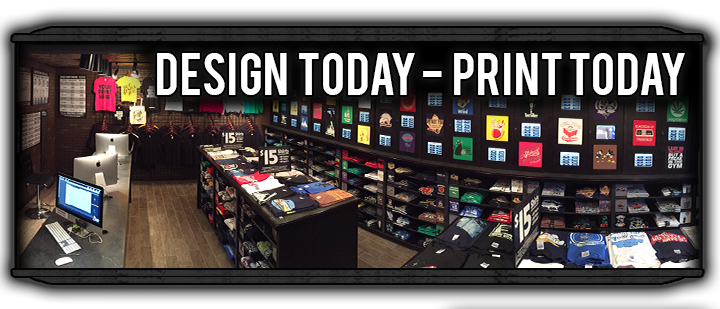
Retro Shirtz Custom Bulk T-Shirts Printing near Regency inside Westroads Mall in Omaha
At Retro Shirtz we understand the importance of logo design. So we provide free graphic design, including free logo design with all standard custom shirt orders.
Our free graphic design services include:
- suggesting and implementing fonts
- changing the colors and layout of the fonts, and our team’s excellent skills at creating custom image assets.